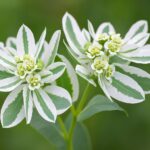

Understanding the water requirements of snow-on-the-mountain is fundamental to its successful cultivation, and the key takeaway is its pronounced tolerance for dry conditions. This plant is native to prairies and open plains, where it has adapted to thrive in environments with infrequent rainfall and well-draining, often poor, soils. Once established, its deep taproot allows it to access moisture from lower soil profiles, making it an excellent candidate for water-wise gardening and xeriscaping. The most common mistake gardeners make is overwatering, which can lead to a host of problems far more detrimental than a period of dryness. Therefore, a conservative approach to irrigation is the best strategy for maintaining a healthy and vibrant plant.
The plant’s life stage is the most significant factor influencing its need for water. During germination and the initial seedling phase, consistent moisture is paramount. The soil surface where seeds have been sown should be kept evenly moist to encourage sprouting and support the delicate young roots. Similarly, when you transplant seedlings that were started indoors, they will require regular watering for the first couple of weeks to help them overcome transplant shock and establish themselves in their new environment. During this initial period, the developing root system is still shallow and has not yet gained the ability to seek out deeper water sources.
As the plant matures and its root system delves deeper into the soil, its water requirements decrease dramatically. For a plant situated in a garden bed, average rainfall in most temperate climates is often entirely sufficient to meet its needs throughout the summer. You should only consider providing supplemental irrigation during extended periods of drought, especially when combined with extreme heat. An easy way to check if watering is needed is to insert your finger a few inches into the soil near the plant; if the soil is dry at that depth, then a deep, infrequent soaking is appropriate.
When you do need to water, the method you use is just as important as the frequency. It is always best to water the plant at its base, delivering water directly to the soil and root zone. Avoid using overhead sprinklers, as wetting the foliage unnecessarily can increase the risk of fungal diseases, such as powdery mildew, especially in humid conditions. Watering deeply encourages the roots to grow further down into the soil in search of moisture, which in turn strengthens the plant’s overall drought resistance for the future. A single, thorough soaking is far more effective than several light, shallow waterings.
The plant’s natural drought tolerance
The remarkable drought tolerance of snow-on-the-mountain is not an accident of cultivation but a deeply ingrained genetic trait developed over generations of survival in its native habitat. Hailing from the plains and prairies of North America, this species is evolutionarily designed to withstand periods of low rainfall and high temperatures. Its ability to thrive in such conditions is largely attributed to its efficient root system, which features a prominent taproot that can penetrate deep into the soil profile to access moisture that is unavailable to more shallow-rooted plants. This adaptation makes it an incredibly resilient and low-maintenance choice for the garden.
More articles on this topic
The plant’s foliage also plays a role in its water conservation strategy. The leaves are relatively small and have a slightly waxy surface, which helps to reduce water loss through transpiration, the process by which plants release water vapor into the atmosphere. This efficiency means that the plant can maintain its turgor and continue to photosynthesize even when soil moisture levels are low. This inherent hardiness is a significant benefit for gardeners seeking to create beautiful landscapes that are also environmentally responsible and require minimal supplemental irrigation.
This natural resilience means that snow-on-the-mountain is an ideal candidate for gardens in arid regions or for areas of a landscape that are difficult to water regularly, such as slopes or distant borders. It fits perfectly into xeriscaping principles, which focus on creating gardens that require little to no extra water from irrigation. By choosing plants like this that are well-suited to the local climate, gardeners can significantly reduce their water consumption while still enjoying a lush and visually appealing outdoor space throughout the driest parts of the summer.
It is important for the gardener to trust in this natural tolerance and resist the urge to overwater. Providing too much moisture can actually weaken the plant, discouraging the development of a deep root system and making it more dependent on supplemental watering. Furthermore, constantly saturated soil can lead to anaerobic conditions, starving the roots of oxygen and creating an ideal environment for pathogenic fungi that cause root rot. In the case of snow-on-the-mountain, less is truly more when it comes to irrigation.
Watering newly planted specimens
The period immediately following planting, whether by direct sowing or transplanting, is the only time in the life of snow-on-the-mountain when it requires consistently moist conditions. For newly sown seeds, the top layer of soil must be kept damp to trigger the germination process and sustain the tiny seedlings as they emerge. If the seedbed is allowed to dry out completely, germination can be spotty or fail altogether. A gentle misting or a fine spray from a hose is the best way to water without dislodging the seeds or compacting the soil surface.
More articles on this topic
For young seedlings that have been transplanted into the garden, the initial watering is critical for settling the soil around the delicate root ball and eliminating any air pockets. Water them in thoroughly right after planting. For the next one to two weeks, the soil should be kept evenly moist to help the plants recover from the stress of being moved and to encourage the roots to grow out into the surrounding soil. This initial care is an investment that helps the plant build the foundation for its future self-sufficiency and drought tolerance.
During this establishment phase, it is important to monitor the plants and the soil closely. The goal is to maintain moisture, not to create a waterlogged swamp. Before watering again, check the soil with your finger. If the top inch is still damp, you can likely wait another day. The frequency of watering will depend on your specific conditions, including soil type, temperature, and sun exposure. Sandy soils will dry out faster than clay-based soils, and hot, windy days will increase the rate of evaporation.
Once you observe signs of new growth, such as the appearance of new leaves, it is a clear signal that the plant’s root system is becoming established. This is the point at which you can begin to gradually reduce the frequency of your watering. Start by allowing the top inch or two of soil to dry out between waterings. This process weans the plant off of constant moisture and encourages its roots to start growing deeper in search of water, which is the key to activating its natural drought tolerance for the rest of the season.
Irrigation during peak growing season
Once snow-on-the-mountain has moved beyond the seedling stage and is well-established in the garden, its irrigation needs plummet. During the main growing season, from early summer through to the first frost, the plant is remarkably self-reliant. In most gardening zones that receive occasional summer rain, you may not need to provide any supplemental water at all. The extensive root system that it developed during the establishment phase is now hard at work, drawing moisture from deep within the soil, allowing the plant to withstand typical dry spells with ease.
The need for intervention only arises during periods of prolonged and severe drought. If you experience several weeks with no significant rainfall, coupled with persistently high temperatures and sunny days, the plant may begin to show signs of stress. In this scenario, a deep and infrequent watering is the most effective approach. This means applying a large volume of water slowly, allowing it to soak deep into the soil profile rather than just wetting the surface. Using a soaker hose or letting a regular hose trickle at the base of the plant for an extended period are excellent methods to achieve this.
A deep watering every two to three weeks during a severe drought is far more beneficial than a light sprinkling every few days. Shallow watering encourages the development of a shallow root system, making the plant less resilient and more dependent on your intervention. In contrast, deep watering replenishes the moisture in the lower soil layers, reinforcing the plant’s natural tendency to grow deep roots. This practice not only helps the snow-on-the-mountain but also improves the drought tolerance of the entire garden bed.
It is also important to consider the impact of your soil type on your watering schedule. Sandy soils drain very quickly and may require more frequent watering during a drought than heavier loam or clay soils, which retain moisture for longer periods. However, even in sandy soils, the principle of deep and infrequent watering remains the same. Always check the soil moisture a few inches down before deciding to water, as the surface can be deceivingly dry while there is still adequate moisture available to the plant’s roots below.
Signs of overwatering and underwatering
While snow-on-the-mountain is more frequently a victim of overzealous watering than neglect, it is useful to recognize the signs of both extremes. Overwatering is the most common and damaging issue. The primary symptom of too much water is yellowing leaves, particularly the lower ones, which may then drop off. The plant’s stems might become soft, weak, and floppy, a condition often exacerbated by overly rich soil. In the most severe cases, the plant will simply wilt and die due to root rot, where the roots are deprived of oxygen in the waterlogged soil and become susceptible to fungal attack.
If you suspect you have overwatered, the first step is to immediately cease all supplemental irrigation. Allow the soil to dry out completely. If the plant is in a container, ensure the drainage holes are not blocked. For garden plants in heavy, poorly draining soil, the long-term solution is to amend the soil with organic matter to improve its structure. Unfortunately, if root rot has already set in extensively, the plant may not be recoverable. Prevention, by providing excellent drainage and watering sparingly, is by far the best cure.
The signs of underwatering, or drought stress, are quite distinct. The plant will begin to wilt, with its leaves drooping, especially during the hottest part of the day. The lower leaves may turn brown and crispy before falling off the stem. While the plant is very drought-tolerant, it is not invincible. This wilting is a clear signal that the plant’s roots are unable to draw enough moisture from the soil to compensate for the water being lost through its leaves via transpiration.
Fortunately, snow-on-the-mountain is incredibly resilient and typically recovers quickly from periods of drought stress once it receives water. If you see your plants wilting, provide a deep, thorough soaking of the root zone as soon as possible, preferably in the cooler morning or evening hours. The plant should perk up within a few hours. This ability to bounce back is a testament to its hardy nature, but repeated cycles of severe wilting and recovery can still stress the plant, so it is best to provide water just before this stage is reached during an extended drought.
Adjusting watering for container-grown plants
Cultivating snow-on-the-mountain in containers requires a different approach to watering compared to growing it in the garden ground. Pots and containers have a limited volume of soil, which means they can dry out much more quickly, especially on hot, windy, or sunny days. The soil in a container is also heated from all sides, further accelerating moisture loss. Therefore, container-grown specimens will need to be watered more frequently than their garden-dwelling counterparts, even with the plant’s natural drought tolerance.
The key to successfully watering container plants is to check the soil moisture regularly. Do not water on a fixed schedule; instead, rely on checking the pot each day. The most reliable method is to insert your finger into the soil up to the second knuckle. If the soil feels dry at that depth, it is time to water. If it still feels moist, you can wait and check again the following day. This practice ensures you are providing water when the plant actually needs it, rather than risking overwatering.
When you do water, do so thoroughly until you see water begin to drain out of the holes in the bottom of the pot. This ensures that the entire root ball has been saturated and also helps to flush out any accumulated salts from the soil. After this deep watering, allow the pot to drain completely and do not let it sit in a saucer full of water, as this can lead to the same root rot problems that affect plants in poorly draining garden soil. Proper drainage is absolutely critical for the health of any container-grown Euphorbia.
The material and size of the container will also influence your watering frequency. Porous materials like terracotta will dry out much faster than non-porous materials like plastic or glazed ceramic. Smaller pots have less soil volume and will need watering more often than larger containers. By being observant and adjusting your watering practices based on the container, the weather, and the needs of the plant, you can successfully grow a beautiful snow-on-the-mountain in any pot or planter.