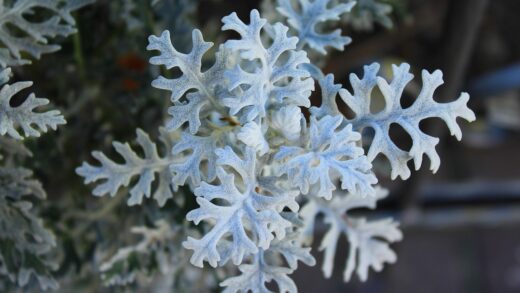

White mistletoe is exceptionally well-adapted to surviving the winter, a trait that is central to its folklore and ecological significance. As an evergreen plant living on a deciduous host, it remains visibly green and alive when its host tree appears dormant and lifeless. This stark contrast is what makes it so noticeable and celebrated during the winter months. The plant does not require any special protection or intervention from gardeners to survive the cold; its entire physiology is geared towards enduring freezing temperatures and continuing its life cycle through the harshest part of the year. Its ability to photosynthesize, albeit at a reduced rate, whenever temperatures are above freezing gives it a significant advantage.
The primary strategy for winter survival lies in its biological makeup. The cells of the mistletoe plant contain high concentrations of solutes, such as sugars and salts, which act as a natural antifreeze. This lowers the freezing point of the water within its cells, preventing the formation of damaging ice crystals that could otherwise rupture cell membranes. This adaptation allows the tough, leathery leaves and stems to remain pliable and functional even in sub-zero conditions. It is a passive but highly effective defense mechanism that requires no external shelter or covering.
Furthermore, its parasitic relationship with the host tree provides a stable platform high above the frozen ground and insulating snow cover. While the deciduous host tree enters a state of deep dormancy, its woody structure remains intact and its vascular tissues, though largely inactive, still contain water. The mistletoe’s haustorium, the specialized root system embedded within the host branch, is well-protected from the extremes of temperature fluctuation that occur at the soil level. This secure and insulated position contributes significantly to its ability to overwinter successfully.
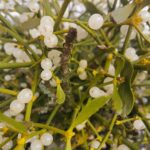
The winter period is also a crucial phase in the mistletoe’s reproductive cycle. The white berries, which ripen in late autumn, persist on the female plants throughout the winter. These berries are a vital food source for birds like thrushes and waxwings when other food is scarce. This timing is a brilliant evolutionary strategy, ensuring that its seeds are dispersed by birds precisely during the dormant season. The birds, in turn, deposit the sticky seeds onto the branches of other suitable hosts, setting the stage for new plants to germinate in the coming spring.
The role of the host in winter
During winter, a deciduous host tree enters a state of dormancy to conserve energy and protect itself from the cold. It sheds its leaves, dramatically reduces its metabolic activity, and stops drawing large amounts of water from the frozen ground. Despite this dormancy, the host continues to play a vital, albeit passive, role in the mistletoe’s winter survival. The physical structure of the tree provides the necessary support and elevation, keeping the mistletoe exposed to the winter sun for photosynthesis whenever conditions allow.
More articles on this topic
The connection between the mistletoe and the host’s vascular system, while less active, is maintained throughout the winter. The evergreen mistletoe continues to lose a small amount of water through transpiration, especially on sunny or windy days, and it relies on the residual water available within the host’s xylem to replenish this loss. The host tree acts as a passive reservoir of water, providing the minimal amount needed for the mistletoe to maintain its hydration and cellular function until spring when the flow of sap resumes in earnest.
The structural integrity of the host is paramount during the winter months. A healthy, strong host branch can easily support the weight of a mistletoe clump. However, winter brings the added challenges of snow and ice accumulation. The dense, leafy structure of a mistletoe clump can catch and hold a significant amount of snow, dramatically increasing its weight. If the host branch is weak, diseased, or already compromised, this additional load can cause it to break. Therefore, the host’s structural health is a key factor in the mistletoe’s ability to physically survive the winter intact.
No special care is needed for the host tree during the winter specifically for the sake of the mistletoe. The best winter preparation is the year-round care provided to the host. Ensuring the tree is healthy, well-structured, and free from major defects or diseases before it enters dormancy is the most effective way to guarantee that it can withstand the winter stresses and continue to support its parasitic companion. A healthy host entering winter is the best guarantee of a healthy mistletoe emerging in spring.
Mistletoe’s physiological adaptations
Mistletoe’s ability to continue photosynthesis during the winter is a key adaptation. While the rate is much lower than in summer due to shorter day lengths, lower light intensity, and cold temperatures, it is still significant. This process allows the plant to continue producing its own sugars for energy, supplementing the resources it draws from the host. This autotrophic capability is what defines it as a hemiparasite, and it is particularly important during the host’s dormancy when the supply of sugars from the host’s phloem is greatly reduced.
More articles on this topic
The plant’s morphology also contributes to its winter hardiness. The leaves are thick and leathery with a waxy cuticle, which helps to reduce water loss—a critical feature when water is not being actively transported by the host. The stems are woody and robust, able to withstand wind and the weight of snow. The entire plant has a compact, spherical growth habit that minimizes the surface area exposed to damaging winds while maximizing its ability to capture light from any angle.
The timing of its flowering is another interesting winter adaptation. White mistletoe often flowers in the late winter, sometimes as early as February, long before its host tree shows any signs of life. This strategy allows it to take advantage of the early-season pollinating insects that may be active on mild winter days. By flowering at this unusual time, it avoids competition for pollinators with the host tree and other spring-blooming plants, ensuring successful fertilization and the subsequent development of its berries for the following winter.
Inside the plant, the haustorial system remains protected deep within the host’s tissues. This internal “root” system is not exposed to the external environment and is buffered from the most extreme temperature drops. It maintains the vital link to the host, ready to take full advantage of the rising sap as soon as the host tree breaks dormancy in the spring. This secure internal connection ensures the mistletoe’s survival and allows for a rapid start to growth once favorable conditions return.
Potential winter hazards and management
The most significant physical hazard to mistletoe and its host in winter is the combined effect of snow and wind. A large mistletoe clump can act like a sail in the wind and can accumulate a heavy load of wet snow or ice. This creates immense mechanical stress on the host branch. The primary management strategy to mitigate this risk is proactive pruning. Reducing the size and density of large mistletoe clumps in the autumn can significantly decrease the surface area available for snow and ice accumulation, thereby lessening the risk of branch failure.
While mistletoe is very cold-hardy, extreme and rapid temperature drops, known as advective freezes, can sometimes cause damage. This might manifest as browning or “burning” of the leaves. This is usually just cosmetic damage, and the plant typically recovers well in the spring, putting out new growth from its hardy stems. There is no practical way to protect the plant from such extreme weather events, but healthy, well-established plants are more resilient and better able to recover from this type of injury.
Winter can also be a time of relative drought for evergreen plants. If the ground is frozen solid for an extended period, the host tree cannot absorb any water. Meanwhile, on sunny and windy winter days, the mistletoe can lose water through transpiration. This can lead to desiccation or winter burn. However, mistletoe’s adaptations for reducing water loss are very effective, and this is rarely a serious problem unless the winter is exceptionally dry and preceded by a dry autumn.
Human activity in winter is a minor but potential hazard. For instance, de-icing salts used on nearby roads or paths can be detrimental if they get into the host tree’s root zone. The high concentration of salt can create a toxic environment for the roots and interfere with water uptake, stressing the host tree. While this is a threat to the host year-round, the effects may become apparent in the spring. Being mindful of salt usage in the vicinity of any valuable tree is a good general practice.