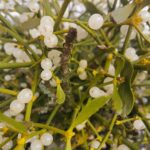

White mistletoe is a remarkably resilient plant that is subject to relatively few diseases and pests of its own. Its semi-parasitic nature and tough, leathery leaves provide a good defense against many common pathogens and insects that affect other plants. However, it is not entirely immune, and more importantly, its health is inextricably linked to the health of its host tree. Often, what may appear as a problem with the mistletoe is actually a symptom of a much larger issue affecting the host. Therefore, a holistic approach is required, examining the entire plant system—both parasite and host—to accurately diagnose and address any issues.
The most common problems associated with mistletoe are not caused by pathogens attacking the mistletoe itself, but rather by the physiological stress the mistletoe places on the host. A heavy infestation can weaken a tree, making it more susceptible to a wide range of secondary pests and diseases that it might otherwise resist. For example, the constant drain on water and nutrients can leave a host vulnerable to opportunistic fungal cankers, wood-boring insects, and root rot pathogens. In this context, the mistletoe acts as a significant predisposing factor to other health problems for the tree.
When diagnosing issues, it is essential to first carefully observe the host tree. Look for signs of stress such as wilting, canopy dieback, discolored leaves, or unusual growths on the trunk or branches. These are often the first indicators that the balance between the host and the mistletoe has been compromised. The mistletoe clump itself might look perfectly healthy, even while the branch it is growing on begins to decline, as it will continue to draw resources until the branch is no longer viable.
Conversely, if the mistletoe itself shows signs of decline—such as yellowing leaves, dieback of its own stems, or a failure to produce berries—it can be a strong signal that the host tree is in serious trouble. The mistletoe’s health is a direct reflection of the host’s ability to provide it with water and nutrients. A sick or dying mistletoe plant on a living host is a grave sign, suggesting that the host’s vascular system may be failing or that it is under extreme environmental stress.
Fungal issues affecting mistletoe
Although uncommon, there are a few fungal pathogens that can directly affect white mistletoe. One of the most noted is a type of leaf spot fungus that can cause dark, necrotic spots on the leaves and stems. These infections are more likely to occur during prolonged periods of wet, humid weather. While typically a cosmetic issue that does not threaten the life of the plant, a severe infection can reduce the plant’s photosynthetic capacity and overall vigor. Good air circulation around the plant can help to minimize the risk of such fungal problems.
More articles on this topic
Another potential issue is the development of sooty mold on the surface of the mistletoe’s leaves. Sooty mold itself is not a pathogenic fungus; it does not infect the plant tissue. Instead, it grows on the sugary excrement, known as honeydew, produced by sap-sucking insects like aphids. If you see a black, soot-like coating on the mistletoe, you should look closely for an underlying insect infestation, as they are the root cause of the problem. The mold can be washed off with a strong jet of water, but it will return if the insects are not managed.
Occasionally, the point of attachment between the mistletoe and the host can become a site for fungal infection. The swelling, or burr, that often forms on the host branch at the site of the haustorium can develop cracks in the bark, providing an entry point for wood-decay fungi. This is a problem for the host tree rather than the mistletoe. These fungi can begin to rot the wood of the branch, compromising its structural integrity and potentially causing it to break. This is another reason why monitoring the host’s health is so critical.
Management of fungal diseases on mistletoe is rarely necessary. Fungicide applications are generally not recommended or practical, especially on a plant situated high up in a tree. The best approach is preventative. By ensuring the host tree is healthy and not overly stressed, you indirectly ensure the mistletoe is more resilient. If a particular mistletoe clump is severely affected by a fungal issue, the most practical solution is often to prune out the infected clump to prevent any potential spread and to improve the overall aesthetics.
Insect pests on mistletoe
White mistletoe has a few specialist insect pests that have co-evolved to feed on it. One such group includes certain species of psyllids, also known as jumping plant lice. These small insects use their piercing-sucking mouthparts to feed on the sap of the mistletoe. A large population can cause stippling or yellowing of the leaves and may lead to a general decline in the plant’s vigor. Their presence is often indicated by the sticky honeydew they excrete, which can lead to the growth of sooty mold.
More articles on this topic
Aphids can also occasionally colonize mistletoe plants. Similar to psyllids, they feed on the plant’s sap and can cause distortion of new growth and produce copious amounts of honeydew. While a small aphid population is unlikely to cause significant harm, a large infestation can weaken the plant. Natural predators such as ladybugs, lacewings, and hoverflies are usually very effective at keeping aphid populations in check. Encouraging these beneficial insects in the garden is a key component of an integrated pest management strategy.
A more direct and damaging pest is the mistletoe marble moth (Celypha woodiana), whose larvae mine the leaves and stems of the mistletoe. The caterpillars tunnel within the plant tissues, creating visible trails or blotches and hollowing out the stems. This can cause significant damage to the affected parts of the plant, leading to dieback of individual stems. While this moth is quite specific to mistletoe, its impact is usually localized and is not typically a threat to the entire clump.
Control of insect pests on mistletoe should prioritize biological and mechanical methods. For accessible clumps, a strong spray of water from a hose can dislodge many aphids and psyllids. Encouraging natural predator populations is the most sustainable long-term solution. The use of broad-spectrum insecticides is strongly discouraged, as they can harm beneficial insects and pollinators and are difficult to apply safely high up in a tree. Given mistletoe’s resilience, most insect infestations can be tolerated without the need for chemical intervention.
Host tree diseases and their impact
The health of the host tree is the most critical factor, and many diseases that affect the host will have a direct impact on the mistletoe. For instance, if the host tree contracts a vascular wilt disease, such as Verticillium wilt, the fungus clogs the xylem, blocking the flow of water. This will not only cause the host’s leaves to wilt and die, but it will also starve the mistletoe of its water supply, causing it to decline and perish as well. The mistletoe’s health, in this case, is a direct barometer of the host’s internal health.
Root rot diseases, such as those caused by Phytophthora or Armillaria fungi, are another major threat. These pathogens attack the host tree’s root system, impairing its ability to absorb water and nutrients. As the host’s health declines due to a failing root system, it will be unable to support the demands of the mistletoe. The entire system—both tree and parasite—will exhibit symptoms of decline, including thinning canopy, dieback, and eventual death. Improving soil drainage and avoiding overwatering are key preventative measures for the host.
Canker diseases, which cause localized dead areas on the bark of branches and trunks, can also impact the mistletoe. If a canker forms on the same branch that the mistletoe is growing on, it can girdle the branch, cutting off the flow of sap. This will lead to the death of the branch beyond the canker, and any mistletoe growing on that section will die along with it. Proper pruning techniques and avoiding unnecessary wounds to the host tree can help prevent the entry of canker-causing fungi.
Essentially, any disease that compromises the host tree’s vascular system or its overall ability to photosynthesize and absorb resources will have a direct and negative effect on the mistletoe it supports. Therefore, the primary strategy for keeping mistletoe “disease-free” is to focus on the proactive care and disease prevention for the host tree. This includes selecting disease-resistant tree varieties, providing proper cultural care, and promptly addressing any signs of illness in the host.
Abiotic disorders and environmental stress
Environmental factors, or abiotic disorders, are a major source of problems for the host-mistletoe system. As previously discussed, prolonged drought is one of the most significant threats. When the host tree is water-stressed, it cannot adequately supply the high water demands of the mistletoe. This can lead to the decline of both organisms. The presence of mistletoe makes the host tree significantly less resilient to drought conditions, making supplemental watering of the host a critical management practice in dry climates or during dry spells.
Soil compaction is another serious abiotic issue. In urban or high-traffic areas, the soil around a tree can become heavily compacted, reducing pore space for air and water and physically impeding root growth. This starves the roots of oxygen and makes it difficult for them to absorb water and nutrients. The host tree’s health will decline, which will be mirrored in the health of the mistletoe. Aerating the soil and applying a layer of organic mulch can help to alleviate compaction over time.
Nutrient deficiencies in the soil can also cause problems. If the host tree cannot access essential minerals, its growth and health will be impaired. This “malnutrition” is passed directly to the mistletoe, which will likely show symptoms such as chlorosis (yellowing) and stunted growth. A soil test can identify specific deficiencies, which can then be corrected by applying the appropriate fertilizer to the host tree’s root zone, benefiting both the tree and its parasitic tenant.
Mechanical damage to the host tree is another concern. Wounds from lawnmowers, construction activities, or improper pruning can create entry points for pests and diseases that can weaken the entire system. Furthermore, the weight of a large mistletoe clump, especially when laden with snow or ice, can cause the host branch to break. This is a physical, not pathological, problem, but it is one of the most common forms of damage associated with mistletoe. Proactive pruning of the mistletoe to reduce its size and weight can prevent this type of damage.