
Light is the fundamental source of energy for nearly all plant life, and for the black pine, access to ample sunlight is not just a preference—it is an absolute necessity for survival and vigorous growth. This species is a classic sun-loving conifer, and its entire structure and physiology are optimized to thrive in open, light-filled environments. Understanding its profound need for direct sun and the consequences of inadequate light is crucial for anyone looking to cultivate a healthy, structurally sound, and aesthetically pleasing black pine. This professional article explores the critical role of sunlight in the life of the black pine, from its early development to its mature form.
The imperative of full sun exposure
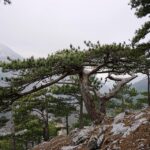
The black pine is unequivocally classified as a full-sun species, meaning it requires a minimum of six, and preferably eight or more, hours of direct, unobstructed sunlight each day during the growing season. This requirement is deeply embedded in its genetic makeup, reflecting its natural habitat on open, rocky slopes and coastal areas where competition for light is minimal. Sunlight is the fuel that drives photosynthesis, the process by which the tree converts carbon dioxide and water into the sugars it needs for energy and growth. Without sufficient light, this essential process is severely hampered.
When a black pine receives adequate sunlight, it is able to produce enough energy to support robust growth, develop strong branches, and maintain a dense covering of its characteristic long, dark green needles. This vigor translates directly into resilience. A well-nourished tree, powered by ample sunlight, is far better equipped to defend itself against pests, withstand diseases, and recover from environmental stresses such as drought or physical damage. In essence, providing full sun is the most fundamental step you can take to ensure the long-term health and vitality of your tree.
The intensity of the light is also a factor. The bright, direct light of midday is more photosynthetically valuable than the weaker light of the early morning or late afternoon. Therefore, a location that is sunny for most of the day is ideal. When selecting a planting site, it is critical to observe the pattern of sunlight and shadow throughout the day and across different seasons. Be mindful of shadows cast by buildings, fences, or other larger trees, and remember that a spot that is sunny in the summer might be shaded in the winter when the sun is lower in the sky.
This absolute need for sun means the black pine is an unsuitable choice for shaded or woodland gardens. Attempting to grow this tree under the canopy of larger deciduous trees or on the north side of a tall building will invariably lead to disappointment. The tree will struggle to survive and will never develop the strong form and dense foliage that make it so desirable. It is a species that demands a prominent, open position in the landscape, where it can command the sunlight it needs to flourish.
More articles on this topic
Light needs during different life stages
From the moment a black pine seed germinates, its life is a quest for light. Young seedlings are particularly dependent on bright light to fuel their initial growth and establish a strong root system. In a nursery or propagation setting, seedlings must be provided with plenty of light to prevent them from becoming “etiolated”—a condition where they grow long, thin, and weak stems as they stretch desperately towards a light source. This early phase of development sets the stage for the tree’s future structure and health.
As a young sapling is planted in the landscape, its access to sunlight continues to be a primary driver of its development. With ample light, the young pine will typically develop a strong central leader—a dominant upright stem—and well-spaced, symmetrical tiers of branches. This is the classic conical shape of a young conifer. This structure is not only aesthetically pleasing but also highly efficient at capturing sunlight from all angles. Full sun exposure during these formative years is what builds the strong, well-proportioned framework that will support the tree throughout its life.
As the black pine matures, its growth habit naturally changes. The strong apical dominance of the central leader often lessens, and the tree’s crown begins to broaden, eventually taking on a more rounded or picturesque, flat-topped silhouette in old age. Even in this mature stage, the need for light remains paramount. The outer needles of the canopy perform the vast majority of the tree’s photosynthesis, and they require direct sun to function efficiently. The tree will naturally shed its shaded, inner branches over time as they become less productive, a process known as self-pruning.
This lifelong need for light dictates how black pines grow in a forest setting. They are considered a “pioneer” species, often being one of the first trees to colonize open, disturbed areas. They grow quickly in full sun, but they are eventually overtaken by more shade-tolerant species that can germinate and grow up in their shadow. This is why in a mixed forest, you will rarely find young black pines growing successfully on a shaded forest floor. They need a gap in the canopy or an open field to get their start.
More articles on this topic
The consequences of inadequate light
When a black pine is deprived of the full sun it craves, the consequences are predictable and detrimental. The most immediate and visible symptom is a significant reduction in the density of its foliage. The tree will appear thin, sparse, and “leggy,” with large gaps between the branches and a meager covering of needles. This happens because the tree does not have enough energy to produce and sustain a full complement of foliage, so it allocates its limited resources to only the most productive, sun-exposed parts.
Structurally, a lack of light leads to weak, elongated growth. The branches will stretch out, often in an irregular or asymmetrical fashion, as they reach for any available source of light. This is known as phototropism. This growth is typically weak and spindly, with elongated spaces between the needle clusters. The branches will be more prone to bending or breaking under the weight of snow or in strong winds. The tree will also fail to develop a strong, sturdy trunk, further compromising its structural integrity.
A light-starved black pine is a stressed black pine, and this stress makes it highly vulnerable to a host of secondary problems. The weakened tree will have a greatly diminished capacity to defend itself against insect pests like bark beetles and pine sawflies. It will also be far more susceptible to fungal diseases such as Diplodia tip blight and various needle casts, which can take hold more easily on a tree that lacks the vigor to fight them off. The combination of poor growth and increased susceptibility to pests and diseases can lead to a spiral of decline from which the tree may not recover.
Ultimately, planting a black pine in a location with insufficient light is a recipe for failure. The tree will never achieve its aesthetic potential and will likely suffer from chronic health issues, leading to a short and unattractive life. It is far better to choose a different, more shade-tolerant species for a low-light location than to try and force a sun-loving tree like the black pine to grow in unsuitable conditions. Respecting a plant’s fundamental requirements is the most basic principle of successful gardening.
Adapting to partially shaded locations
While full, all-day sun is the ideal, there are situations in landscape design where a black pine might be sited in a location that receives partial shade for a portion of the day. For example, it might be shaded by a building for the morning hours but receive full, direct sun for the entire afternoon. In such cases, the tree’s ability to adapt and perform adequately depends heavily on the duration and timing of the direct sunlight it does receive. If the tree can still get at least six hours of direct, intense sunlight, particularly during the middle of the day, it may still be able to grow reasonably well.
In a partial shade situation, you can expect some noticeable changes in the tree’s growth habit compared to one grown in full sun. The tree will likely be less dense, and the growth on the side of the tree that receives more sun will be noticeably more vigorous and full than the growth on the shadier side. This can result in a somewhat lopsided or asymmetrical appearance. This is a direct response to the light availability, as the tree channels its energy to the areas where photosynthesis is most efficient.
To help a black pine in a less-than-ideal light situation, there are a few cultural practices that can make a difference. Firstly, it is crucial to avoid any additional stressors. This means being particularly diligent about providing adequate water during establishment and drought periods and ensuring the soil has excellent drainage. Secondly, do not over-fertilize the tree. Adding excess nitrogen will only encourage weak, lanky growth that the tree’s limited energy reserves cannot properly support.
Pruning can also play a role in managing a pine in partial shade. By selectively thinning some of the branches, you can help to improve light penetration and air circulation throughout the canopy. This can help to invigorate the lower and inner branches that might otherwise be shaded out. However, it is important to remember that pruning cannot compensate for a fundamental lack of light. If a black pine is in a location that receives less than six hours of direct sun, its long-term prognosis is poor, and relocation to a sunnier spot or replacement with a shade-tolerant species is often the best course of action.